193 symposiums and 30,000 attendees since 2001

Robert Fischer

Java Concurrency Specialist and GORM Expert; Principal, Smokejumper Consulting

Robert Fischer is a multi-language open source developer currently specializing in Groovy in Grails. In the past, his specialties have been in Perl, Java, Ruby, and OCaml. In the future, his specialty will probably be F# or (preferably) a functional JVM language like Scala or Clojure.

Robert is the author of Grails Persistence in GORM and GSQL, a regular contributor to GroovyMag and JSMag, the founder of the JConch Java concurrency library, and the author/maintainer of Liquibase-DSL and the Autobase database migration plugin for Grails.


Blog

log.debug { "$toStringMe only if necessary!" }

Posted Friday, March 19, 2010

I’ve just updated the @WithLog AST transform for Groovy. In case you don’t know, that’s my project over at GitHub which allows you to more »

Open Source Update: jQuery PeriodicalUpdater, TestingLabs, GPars, etc.

Posted Friday, March 12, 2010

I’ve done a fair bit of fairly small open source updates recently. jQuery PeriodicalUpdater: The main function now returns a handle that can be used to call stop(), thereby ignoring any updates that may come back and preventi more »

Scala: Post-Functional, Post-Modern, or Just Perl++?

Posted Saturday, March 6, 2010

Let’s start with some background. I complained that Scala did not seem to be very functional to me, but I didn’t really know how best to express what was fundamentally wrong with it. I did know that if “functional l more »

DynamicDomainProperties and the AGPL

Posted Saturday, February 20, 2010

I just released the DynamicDomainProperties plugin for Grails, which allows domain classes to have dynamic properties. It’s pretty nifty, if I do say so myself. Based on my frustration with the Grails plugin culture because of more »

I Don’t Get It

Posted Friday, February 5, 2010

When encountering a bug in an open source project, most Java people seem unwilling to either fix it themselves or pay the maintainer to fix it—they’d rather abandon the project or kludge their software painfully and repetitively. more »

The Gradual Death of IE6 Just Got a Nitro Boost

Posted Tuesday, February 2, 2010

From the Official Google Enterprise Blog: Many other companies have already stopped supporting older browsers like Internet Explorer 6.0 as well as browsers that are not supported by their own manufacturers. We’re also going to begin ph more »

New Layout and Design Facelift

Posted Sunday, January 31, 2010

T more »

WPTouch Enabled

Posted Wednesday, January 27, 2010

I more »

Warning: Toshiba External HDD Sucks for Linux

Posted Monday, January 11, 2010

A more »

Gradle-Plugins 0.5.1 released

Posted Tuesday, January 5, 2010

Thanks to Jeppe Nejsum Madsen, the Gradle-Plugins just relea more »

Why I Love Descartes

Posted Saturday, January 2, 2010

H more »
Read More Blog Entries »

Presentations

Architecting Code for Concurrent Execution: Theory and Practice

The power of multicore machines and cloud computing is all dependent on an application's ability to successfully leverage concurrency. Although concurrency has traditionally been considered fatally difficult in Java, a few simple architecture principles more »

A Practical Take on GORM

For years, the venerable Hibernate object-relational mapping framework has dominated the persistence scene in Java. The Grails web application framework extended Hibernate and Spring with their impressive GORM persistence framework, providing convention- more »

Polyglot Programming on the JVM

Development of a program has traditionally been done in one language and one language only. Increasingly, however, JVM languages are being expected to interoperate with one another. This talk explores what makes polyglot programming possible, why busine more »

The Concurrency Toolset: JConch, Google Collections, and java.util.concurrent

JConch is a library that provides a few high-level tools for high-concurrency environments on the JVM. The java.util. more »

Demystifying Functional Programming: Jargon and Patterns

With languages like F#, Clojure, and Scala increasingly taking up mindshare, many developers feel pressure to jump into functional programming. The jargon of functional programming can prove a huge barrier, though, and it really shouldn't. This session more »

Grails for the Enterprise

The Grails web application is an innovative hybrid of best-of-breed Java technologies and dynamic/convention-based development. The result is a powerful, flexible, exciting framework that still fits comfortably into enterprise stacks. This session intro more »

Agile Practices Review: A Tactics Retrospective

Increasingly, people are adopting Agile practices a la carte, and some are even talking about "post-Agile" methodologies. If things are going to be changing, let's take a moment to review Agile development practices, the problems they were trying to solv more »

Let's Get Serious About Reusability

Although developers know that abstraction and code reuse are the best way to develop faster, projects so often start with a complete green-field and end up re-implementing standard business functionality. Service Oriented Architecture was one attempt to more »

Build Smarter, Not Harder

All the code and unit tests in the world won't help you if your code can't be built. This session looks at the open source tools Hudson, Gant, and Ivy as ways to simplify and automate the build process, and also discusses best practices when it comes to more »

Release and Dependency Management with Ivy

Although most people think of Ivy as just a dependency management tool, it can also be used for release management. This session moves beyond novice Ivy usage and shows how it can be used to help maintain sanity in a world of many JARs. more »

Integrating Groovy Concurrency with Java

The Groovy language now provides substantial concurrency capabilities via the GPars library, including the ability to work with actors and dataflow concurrency. This talk shows how you can integrate these Groovy concurrency structures into your Java appl more »

Architecting Code for Concurrent Execution: Theory and Practice

close

Robert Fischer By Robert Fischer

The power of multicore machines and cloud computing is all dependent on an application's ability to successfully leverage concurrency. Although concurrency has traditionally been considered fatally difficult in Java, a few simple architecture principles can make all the difference. This session will review some of those principles in both theory and practice.


This session will review the theory of concurrency and the different levels that concurrency will act on. With that basis, it explores the theoretical reasons behind the difficulties in writing concurrent code, and then some practical application architecture techniques to cope with those difficulties.


A Practical Take on GORM

close

Robert Fischer By Robert Fischer

For years, the venerable Hibernate object-relational mapping framework has dominated the persistence scene in Java. The Grails web application framework extended Hibernate and Spring with their impressive GORM persistence framework, providing convention-over-configuration development to the O/RM and DAO layers. This session will introduce GORM and work up to some of its intermediate features.


Before too long, every data access layer starts to look the same. Spring recognized this and provided some common functionality. The Grails web framework went one step further and provided conventional access to their ORM objects. Now GORM is available to non-Grails applications as well, so this session should have universal appeal.


Polyglot Programming on the JVM

close

Robert Fischer By Robert Fischer

Development of a program has traditionally been done in one language and one language only. Increasingly, however, JVM languages are being expected to interoperate with one another. This talk explores what makes polyglot programming possible, why businesses should adopt the polyglot development model, and compares the interoperability of JRuby, Groovy, Scala, and Java.


It is very possible for an application written on the JVM to be made up of many different languages. In fact, that model of development will be increasingly popular as languages increasingly specialize in their domain of strength. Because of that, polyglot programming will become one of the key skills expected of JVM developers, and this session gives a leg up on that.


The Concurrency Toolset: JConch, Google Collections, and java.util.concurrent

close

Robert Fischer By Robert Fischer

JConch is a library that provides a few high-level tools for high-concurrency environments on the JVM. The java.util.concurrent package in the Java standard library provides low-level structures for managing concurrent communication. Learn here how to use both of them in order to produce clean, highly-concurrent, and highly-tunable code.


Programming in a concurrent fashion is quickly becoming mandatory for applications. This session will explore the best ways to do that on the JVM.


Demystifying Functional Programming: Jargon and Patterns

close

Robert Fischer By Robert Fischer

With languages like F#, Clojure, and Scala increasingly taking up mindshare, many developers feel pressure to jump into functional programming. The jargon of functional programming can prove a huge barrier, though, and it really shouldn't. This session will explain what the functional programmers mean when they say things like "closure", "monad", "monoid", and "combinator", and show that they are actually ideas with Java analogs that are more familiar than their names may imply.


Functional programming has been the domain of academics for a long time, but the paradigm is increasingly being considered by business-line developers. Some people even tout it as the movement of the future. Unfortunately, the jargon of functional programming have been defined by academics, which makes breaking into the language tricky. As a student of pure mathematics, a Java programmer, and a functional programming consultant, Robert will translate these ideas between paradigms.


Grails for the Enterprise

close

Robert Fischer By Robert Fischer

The Grails web application is an innovative hybrid of best-of-breed Java technologies and dynamic/convention-based development. The result is a powerful, flexible, exciting framework that still fits comfortably into enterprise stacks. This session introduces Grails, but approaches it from the perspective of an enterprise web development stack, in order to see how Grails works well in mid-size and mature development shops.


Some technologies seem to think that running on the JVM is all that it takes to be enterprise-ready, but the reality is that there is a large context of standard Java technologies like Spring, Hibernate, Log4J, JNDI, and app servers that make up the backbone of enterprise Java shops. This presentation will show how Grails naturally fits into that context because it is built off of those existing technologies.


Agile Practices Review: A Tactics Retrospective

close

Robert Fischer By Robert Fischer

Increasingly, people are adopting Agile practices a la carte, and some are even talking about "post-Agile" methodologies. If things are going to be changing, let's take a moment to review Agile development practices, the problems they were trying to solve, what worked, and what difficulties these new methodologies are responding to. With this information in hand, we can make an intelligent decision about the development methodology for our team.


This interactive session will review the why's, wherefore's, and why not's of test-driven development, continuous integration, iterations, "point"-based estimation, retrospectives, scrums, and other Agile practices.


Let's Get Serious About Reusability

close

Robert Fischer By Robert Fischer

Although developers know that abstraction and code reuse are the best way to develop faster, projects so often start with a complete green-field and end up re-implementing standard business functionality. Service Oriented Architecture was one attempt to solve this, but the overhead in managing and communicating with remote services is often too much for a project to bear. OSGi, a technology for modularizing Java software, moves that service style of thinking into the application itself.


OSGi is an open standard which is implemented in a variety of containers, which allows you to choose from the bare-bones, embedded-focused 80kb Concierge to the full featured Equinox. The basic idea is to provide a module system within Java itself, built off of packages but smaller than the size of an application. By working with these modules and services instead of reaching directly into packages, true reusability and clear differentiation of concerns can be accomplished in the normal day-to-day work of building the application.


Build Smarter, Not Harder

close

Robert Fischer By Robert Fischer

All the code and unit tests in the world won't help you if your code can't be built. This session looks at the open source tools Hudson, Gant, and Ivy as ways to simplify and automate the build process, and also discusses best practices when it comes to the build.


The three tools reviewed here are: * Hudson - A continuous integration server, and the heir apparent to the venerable Cruise Control. * Gant - A thin Groovy wrapper around Ant which provides all the power and extensions of Ant combined with the flexibility of Groovy. * Ivy - A dependency management system that is supported "out of the box" by Gant.


Release and Dependency Management with Ivy

close

Robert Fischer By Robert Fischer

Although most people think of Ivy as just a dependency management tool, it can also be used for release management. This session moves beyond novice Ivy usage and shows how it can be used to help maintain sanity in a world of many JARs.


Ivy is the release and dependency management part of Maven with some modifications. Its capabilities are more than just fetching JARs from iBiblio, and this talk will go through the steps necessary in order to have an environment providing a safe, sane, and powerful way to deploy applications and their dependencies.


Integrating Groovy Concurrency with Java

close

Robert Fischer By Robert Fischer

The Groovy language now provides substantial concurrency capabilities via the GPars library, including the ability to work with actors and dataflow concurrency. This talk shows how you can integrate these Groovy concurrency structures into your Java applications.


The GPars project offers developers new intuitive and safe ways to handle tasks concurrently, asynchronously, and distributed by utilizing the power of the Java platform and the flexibility of the Groovy language. With GPars, Java programs can transparently leverage multiple cores and even multiple systems by moving through a layer of Groovy code.


Robert's NFJS Schedule

Minneapolis, MN
Mar 12 - 14, 2010

Memphis, TN
Apr 23 - 25, 2010


Books

by Robert Fischer

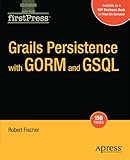
Grails Persistence with GORM and GSQL Buy from Amazon
List Price: $19.99
Price: $17.99
You Save: $2.00 (10%)
  • Unique to the popular Grails web framework is its architecture. While other frameworks are built from the ground up, Grails leverages existing and proven technologies that already have advanced functionality built in. One of the key technologies in this architecture is Hibernate, on top of which Grails builds its GORM (Grails Object Relational Mapping) model layer. This provides Grails a persistence solution.

    Published with the developer in mind, firstPress technical briefs explore emerging technologies that have the potential to be critical for tomorrow’s industry. Apress keeps developers one step ahead by presenting key information as early as possible in a PDF of 150 pages or less. Explore the future through Apress with Grails Persistence with GORM and GSQL

    This firstPress book covers Grails persistence with GORM, from defining your first model to the nature of transactions and advanced Hibernate querying. Other APIs and tools such as GSQL (Groovy SQL) are covered as well, as needed, to empower your Grails persistence efforts.


    What you’ll learn

    • Extend the Grails web framework into a broader, semi–enterprise framework by including and integrating Hibernate–based Java persistence, known as GORM.
    • Use mappings to customize default behaviors and work with legacy schemas.
    • Use constraints to define your object once and have those constraints enforced both in code and at the database level.
    • Use advanced features of GORM and Hibernate Query Language (HQL) to simplify database querying and report generation.
    • Debug and tune trips for GORM and Hibernate.
    • Fill in the gaps with GSQL.

    Who is this book for

    This title is for those who have committed to dedicating some time to mastering Grails and are looking to move beyond the basics, and are especially interested in Grails and Groovy persistence for some limited transaction handling and/or accessing databases.