
Johanna Rothman
Speaker, Consultant, Author for managing product development

Johanna Rothman, known as the “Pragmatic Manager,” offers frank advice for your tough problems. She helps leaders and teams learn to see simple and reasonable things that might work. Equipped with that knowledge, they can decide how to adapt their product development.
With her trademark practicality and humor, Johanna is the author of 18 books about many aspects of product development. She’s written these books:
- Project Lifecycles: How to Reduce Risks, Release Successful Products, and Increase Agility
- Become a Successful Independent Consultant
- Free Your Inner Nonfiction Writer
- Modern Management Made Easy series: Practical Ways to Manage Yourself; Practical Ways to Lead and Serve (Manage) Others; Practical Ways to Lead an Innovative Organization
- Write a Conference Proposal the Conference Wants and Accepts
- From Chaos to Successful Distributed Agile Teams (with Mark Kilby)
- Create Your Successful Agile Project: Collaborate, Measure, Estimate, Deliver
- Agile and Lean Program Management: Scaling Collaboration Across the Organization
- Manage Your Project Portfolio: Increase Your Capacity and Finish More Projects, 2nd edition
- Project Portfolio Tips: Twelve Ideas for Focusing on the Work You Need to Start & Finish
- Diving for Hidden Treasures: Finding the Value in Your Project Portfolio (with Jutta Eckstein)
- Predicting the Unpredictable: Pragmatic Approaches to Estimating Project Schedule or Cost
- Manage Your Job Search
- Hiring Geeks That Fit
- The 2008 Jolt Productivity award-winning Manage It! Your Guide to Modern, Pragmatic Project Management
- Behind Closed Doors: Secrets of Great Management (with Esther Derby)
In addition to articles and columns on various sites, Johanna writes the Managing Product Development blog on her website, jrothman.com, as well as a personal blog on createadaptablelife.com.
PRESENTATIONS
BOOKS
Practical Ways to Manage Yourself: Modern Management Made Easy, Book 1
You can become an excellent manager when you manage yourself first.If you’re like most managers, you’ve never seen management excellence. You are not alone.
Modern management requires we first manage ourselves—and that might be the most challenging part of management. Based on research and backed up by personal stories, you'll see how you can manage yourself.
Through questions, stories, and proven options, learn how you can:
* Move from expert to coach.
* Recognize and avoid micromanagement.
* Support the people doing the work to solve more of their problems.
* Make time to think so you can be your best self.
* Trust the people you lead and serve.
And, much more.
With its question and myth, each chapter offers you options to rethink how you manage yourself.
Become a modern manager.
Learn to manage yourself so you and the people you lead and serve can deliver the results everyone needs.
Practical Ways to Lead and Serve (Manage) Others: Modern Management Made Easy, Book 2
You can excel at managing people when you lead and serve them.You might have only seen managers try to direct and control others. You might think you can't possibly lead and serve others. Especially not with all the pressure you feel. You can.
Great managers create an environment where people can do their best work. These excellent managers lead and serve others—not control or direct them.
Based on research and backed up by personal stories, this book will show you how modern managers lead and serve others.
Through questions and stories, learn how you can:
* Change your focus from individuals to teams.
* Create more capability in each person and as a team.
* Create more engaged teams or workgroups.
* Support people as they manage their careers and eliminate the need for performance reviews.
* Support teams as they can learn to manage themselves.
And, much more.
With its question and myth, each chapter offers you options to rethink how you lead and serve others.
Become a modern manager.
Learn to lead and serve others to deliver the results everyone needs.
Practical Ways to Lead an Innovative Organization: Modern Management Made Easy, Book 3
Would you like your organization to innovate more? Start with your management practices.You might never have seen innovation in management. You are not alone.
Learn to create an environment where people can innovate. See how to use the organization’s purpose to manage for better outcomes. Free people to work better and faster.
Based on research and backed up by personal stories, you'll see how modern managers practice innovation.
Through questions and stories, learn how you can:
* Create management teamwork at all levels.
* Reduce management decision time.
* Manage for effectiveness to promote innovation.
* Plan by value.
* Welcome experiments and learn from them.
* Move from change management to embracing change.
And, much more.
With its question and myth, each chapter offers you options to rethink how you can create management innovation. Change your practices and free the people to deliver better outcomes.
Become a modern manager.
Learn to lead an innovative organization.
From Chaos to Successful Distributed Agile Teams: Collaborate to Deliver
Distributed agile teams have a terrible reputation. They don’t deliver “on time,” and too often, they don’t deliver what the customer needs. However, most agile teams, have at least one remote team member. And, agile approaches are here to stay. Don’t blindly apply agile practices designed for collocated teams. Instead, learn to use three mindset shifts and the agile and lean principles to create your successful distributed agile team. Use the tips and traps to help your team succeed.Leave the chaos of virtual teams behind. See how to help your distributed team succeed.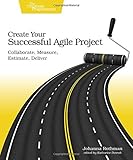
Create Your Successful Agile Project: Collaborate, Measure, Estimate, Deliver
You think agile techniques might be for you, but your projects and organization are unique. An "out-of-the-box" agile approach won't work. Instead, unite agile and lean principles for your project. See how to design a custom approach, reap the benefits of collaboration, and deliver value. For project managers who want to use agile techniques, managers who want to start, and technical leaders who want to know more and succeed, this book is your first step toward agile project success.
You've tried to use an off-the-shelf approach to agile techniques, and it's not working. Instead of a standard method or framework, work from agile and lean principles to design your own agile approach in a way that works for you. Build collaborative, cross-functional teams. See how small batch sizes and frequent delivery create an environment of trust and transparency between the team, management, and customers. Learn about the interpersonal skills that help agile teams work together so well.
In addition to seeing work and knowing what "done" means, you'll see examples of many possible team-based measurements. Look at tools you can use for status reporting, and how to use those measurements to help your managers understand what agile techniques buy them. Recognize the traps that prevent agile principles from working in too many organizations, and what to do about those traps. Use agile techniques for workgroups, and see what managers can do to create and nurture an agile culture. You might be surprised at how few meetings and rituals you need to still work in an agile way.
Johanna's signature frankness and humor will get you on the right track to design your agile project to succeed.
What You Need:No technical expertise or experience needed, just a desire to know more about how you might use agile in your project.
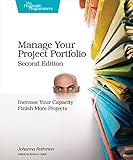
Manage Your Project Portfolio: Increase Your Capacity and Finish More Projects
You have too many projects, and firefighting and multitasking are keeping you from finishing any of them. You need to manage your project portfolio. This fully updated and expanded bestseller arms you with agile and lean ways to collect all your work and decide which projects you should do first, second, and never. See how to tie your work to your organization's mission and show your managers, your board, and your staff what you can accomplish and when. Picture the work you have, and make those difficult decisions, ensuring that all your strength is focused where it needs to be.
All your projects and programs make up your portfolio. But how much time do you actually spend on your projects, and how much time do you spend on emergency fire drills or waste through multitasking? This book gives you insightful ways to rank all the projects you're working on and figure out the right staffing and schedule so projects get finished faster.
The trick is adopting lean and agile approaches to projects, whether they're software projects, projects that include hardware, or projects that depend on chunks of functionality from other suppliers. Find out how to define the mission of your team, group, or department, with none of the buzzwords that normally accompany a mission statement. Armed with the work and the mission, you'll manage your portfolio better and make those decisions that define the true leaders in the organization.
With this expanded second edition, discover how to scale project portfolio management from one team to the entire enterprise, and integrate Cost of Delay when ranking projects. Additional Kanban views provide even more ways to visualize your portfolio.

Diving for Hidden Treasures: Uncovering the Cost of Delay in Your Project Portfolio
Does your organization value and rank projects based on estimation? Except for the shortest projects, estimation is often wrong. You don’t realize the value you planned when you wanted. How can you finish projects in time to realize their potential value? Instead of estimation, consider using cost of delay to evaluate and rank projects. Cost of delay accounts for ways projects get stuck: multitasking, other projects not releasing on time, work queuing behind experts, excessive attention to code cleanliness, and management indecision to name several. Once you know about cost of delay, you can decide what to do about it. You can stop the multitasking. You can eliminate the need for experts. You can reduce the number of projects and features in progress. You can use cost of delay to rank projects and work in your organization. Learn to use cost of delay to make better decisions for your project, program, or project portfolio.
Agile and Lean Program Management: Scaling Collaboration Across the Organization
If you’re trying to use agile and lean at the program level, you’ve heard of several approaches, all about scaling processes. If you duplicate what one team does for several teams, you get bloat, not delivery. Instead of scaling the process, scale everyone's collaboration.With autonomy, collaboration, and exploration, teams and program level people can decide how to apply agile and lean to their work.
Learn to collaborate around deliverables, not meetings. Learn which measurements to use and how to use those measures to help people deliver more of what you want (value) and less of what you don’t want (work in progress). Create an environment of servant leadership and small-world networks. Learn to enable autonomy, collaboration, and exploration across the organization and deliver your product.
Scale collaboration with agile and lean program management and deliver your product.
Predicting the Unpredictable: Pragmatic Approaches to Estimating Cost or Schedule
You’d like to estimate your project’s cost or schedule accurately. So far, none of your approaches have worked. It’s time to consider how you can create an accurate estimate. You might not be able to develop an estimate at the beginning of a project that is good until the end. Few project teams can. Instead, learn a number of ways to see your project and how to address your uncertainties in ways your managers will accept.
Hiring Geeks That Fit
Hiring a person for your team is the single most important decision you can make. It has long-lasting impact, whether you are the manager or a team member. Would you like to learn to hire great people? Not surehow? You need this book.Great geeks are not the same as skill-based staff. You need to analyze your culture, determine your problems, define the essentials you need in a candidate, and then you're off and running.
Great geeks adapt their knowledge to your context. One developer or technical manager is not interchangeable with another. Hiring Geeks That Fit takes the guesswork and cost out of hiring.
Manage Your Job Search
Are you a technical person, such as a software developer, tester, writer, or project manager? You know that a job search is tough. You have to network, online and in person. You have to customize your resume for each job, so you can showcase your talent. You have to look for a culture that fits you. How do you start?Treat your job hunt like the project it is. Use agile and lean project management approaches that allow you to create a visual system.
You’ll increase your productivity, track your progress, evaluate your work, gain feedback, and throw out what doesn’t work while building on your successes. Learn from your past career to optimize for your next step. Full of tips, stories, and humor, you’ll apply practical techniques to take control of the most important project you’ll ever work on: find your next best job.
Manage It!: Your Guide to Modern, Pragmatic Project Management
This book is a reality-based guide for modern projects. You'll learn how to recognize your project's potholes and ruts, and determine the best way to fix problems - without causing more problems.
Your project can't fail. That's a lot of pressure on you, and yet you don't want to buy into any one specific process, methodology, or lifecycle.
Your project is different. It doesn't fit into those neat descriptions.
Manage It! will show you how to beg, borrow, and steal from the best methodologies to fit your particular project. It will help you find what works best for you and not for some mythological project that doesn't even exist.
Before you know it, your project will be on track and headed to a successful conclusion.
Behind Closed Doors: Secrets of Great Management (Pragmatic Programmers)
Great management is difficult to see as it occurs. It's possible to see the results of great management, but it's not easy to see how managers achieve those results. Great management happens in one-on-one meetings and with other managers---all in private. It's hard to learn management by example when you can't see it.
You can learn to be a better manager---even a great manager---with this guide. You'll follow along as Sam, a manager just brought on board, learns the ropes and deals with his new team over the course of his first eight weeks on the job. From scheduling and managing resources to helping team members grow and prosper, you'll be there as Sam makes it happen. You'll find powerful tips covering:
- Delegating effectively
- Using feedback and goal-setting
- Developing influence
- Handling one-on-one meetings
- Coaching and mentoring
- Deciding what work to do---and what not to do
- ...and more.
Full of tips and practical advice on the most important aspects of management, this is one of those books that can make a lasting and immediate impact on your career.