192 symposiums and 29,850 attendees since 2001

Graeme Rocher

Head of Grails Development for SpringSource

As Head of Grails Development for SpringSource, Graeme Rocher is the project lead and co-founder of the Grails web application framework. He's a member of the JSR-241 Expert Group which standardizes the Groovy language. Graeme authored the Definitive Guide to Grails for Apress and is a frequent speaker at JavaOne, JavaPolis, NoFluffJustStuff, JAOO, the Sun TechDays and more. Graeme joined SpringSource in late 2008 upon the acquisition of G2One Inc. Before founding G2One, Graeme was the CTO of SkillsMatter, a skills transfer company specializing in open source technology and agile software development, where Graeme was in charge of the company's courseware development strategy and general technical direction.

Video

Grails for Spring Developers
Thursday - October 2, 2008


Blog

Grails + Spring Integration

Posted Wednesday, December 10, 2008

R more »

Grails + Spring Integration

Posted Tuesday, December 9, 2008

R more »

Interview with me on Grails Podcast

Posted Tuesday, November 25, 2008

Tho more »
Read More Blog Entries »

Presentations

The Grails Plug-in System: Plug into productivity

Grails is more than just a web framework, it is a complete platform and API for runtime configuration. This talk, by Grails project lead Graeme Rocher, will demonstrate Grails' modular architecture and how to hook into runtime configuration to adapt your more »

Grails: Spring & Hibernate Development Re-invented

Spring & Hibernate development, although hailed in the past as being "lightweight", is still an XML-centric, configuration heavy approach to web application development. In this talk, by Grails project lead Graeme Rocher, you will discover how you can more »

GORM - Object Relational Mapping with Hibernate De-mystified

Hibernate is an immensely powerful ORM layer with an array of features and mapping options which comes at the cost of complexity. The web application framework Grails ships with an ORM layer that builds of top of Hibernate, but eliminates much of the comp more »

The Grails Plug-in System: Plug into productivity

close

Graeme Rocher By Graeme Rocher

Grails is more than just a web framework, it is a complete platform and API for runtime configuration. This talk, by Grails project lead Graeme Rocher, will demonstrate Grails' modular architecture and how to hook into runtime configuration to adapt your application based on its environment and/or the presence of other plug-ins.


The talk will start with an overview of the Grails architecture and then jump into an extended example of how to write your own plug-in. As part of the journey you'll learn how to customize the Grails build system, participate in runtime Spring configuration, add new persistence methods that work with Hibernate and enhance your existing classes through Grails' advanced Groovy Meta-programming system.

Session Topics:

  • The Grails Architecture
  • Scripting Grails with Gant
  • Using Grails' Spring DSL: The BeanBuilder
  • Adding new methods, properties and constructors with ExpandoMetaClass
  • Packaging, distributing and installing your plug-in

Grails: Spring & Hibernate Development Re-invented

close

Graeme Rocher By Graeme Rocher

Spring & Hibernate development, although hailed in the past as being "lightweight", is still an XML-centric, configuration heavy approach to web application development. In this talk, by Grails project lead Graeme Rocher, you will discover how you can leverage Spring & Hibernate without ever having to write a line of configuration!


The talk will demonstrate how Grails handles all the heavy lifting by performing runtime configuration based on conventions for you leaving you to focus on your business logic. At the same time you'll discover that none of what Spring & Hibernate provides has been taken away allowing you to leverage what is great about this frameworks from using AOP to mapping onto a legacy database system.

Session Topics:

  • The Grails Architecture Overview
  • Grails & Spring
  • Re-using existing Spring services
  • Leveraging Spring AOP
  • Lightweight Hibernate with Grails
  • Using EJB3 annotations or Hibernate XML to map onto legacy system

GORM - Object Relational Mapping with Hibernate De-mystified

close

Graeme Rocher By Graeme Rocher

Hibernate is an immensely powerful ORM layer with an array of features and mapping options which comes at the cost of complexity. The web application framework Grails ships with an ORM layer that builds of top of Hibernate, but eliminates much of the complexity through clever use of convention and the dynamic features of the Groovy language. Known as GORM, it offers a convention-based mapping strategy that hooks into the Hibernate configuration model and provides an abstraction layer above Hibernate with powerful features like Groovy builders for Criteria, dynamic finders and transaction management through closures.


This talk, by Grails project lead Graeme Rocher, will walk you through the features of GORM and demonstrate how to create different persistence mappings. Once the basics of mapping is understood you'll dive head first into persisting and reading data without ever accessing a Hibernate session!

Session Topics:

  • GORM - An Introduction
  • Mapping Domain Models with GORM
  • Persisting and Reading data
  • Querying with Dynamic finders
  • Querying with Criteria"


Books

by Graeme Rocher and Jeff Brown

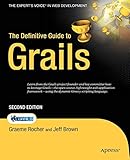
The Definitive Guide to Grails, Second Edition Buy from Amazon
List Price: $46.99
Price: $31.01
You Save: $15.98 (34%)
  • The rise of Ruby on Rails has signified a huge shift in how we build web applications today; it is a fantastic framework with a growing community. There is, however, space for another such framework that integrates seamlessly with Java. Thousands of companies have invested in Java, and these same companies are losing out on the benefits of a Rails–like framework. Enter Grails.

    Grails is not just a Rails clone, it aims to provide a Rails–like environment that is more familiar to Java developers and that employs idioms that Java developers are comfortable using, making the adjustment in mentality to a dynamic framework less of a jump. The concepts within Grails, like interceptors, tag libs, and Groovy Server Pages (GSP), make those in the Java community feel right at home.

    Grails’ foundation is on solid open source technologies such as Spring, Hibernate, and SiteMesh, which gives it even more potential in the Java space: Spring provides powerful inversion of control and MVC, Hibernate brings a stable, mature object relational mapping technology with the ability to integrate with legacy systems, and SiteMesh handles flexible layout control and page decoration.

    Grails complements these with additional features that take advantage of the coding–by–convention paradigm such as dynamic tag libraries, Grails object relational mapping, Groovy Server Pages, and scaffolding.

    Graeme Rocher, Grails lead and founder, and Jeff Brown bring you completely up–to–date with their authoritative and fully comprehensive guide to the Grails framework. You’ll get to know all the core features, services, and Grails extensions via plug–ins, and understand the roles that Groovy and Grails are playing in the changing Web.

    What you’ll learn

    • Discover how the Web is changing and the role the Groovy language and its Rails framework plays.
    • Get to know the Grails Project and its domains, services, filters, controllers, views, testing, and plug–ins.
    • Experience the availability of plug–ins for Rich Client and Ajax, web services, performance/utilities, scheduling, security, functionality, and even Persistence.
    • See how Grails works with other frameworks like Spring, Wicket, Hibernate, and more.
    • Create custom plug–ins in Grails.

    Who is this book for?

    This book is for everyone who is looking for a more agile approach to web development with a dynamic scripting language such as Groovy. This includes a large number of Java developers who have been enticed by the productivity gains seen with frameworks such as Ruby on Rails, JRuby on Rails, etc. The Web and its environment is a perfect fit for easily adaptable and concise languages such as Groovy and Ruby, and there is huge interest from the developer community in general to embrace these languages.