
Esther Derby
Author of 7 Rules for Positive Productive Change. Co-author of Behind Closed Doors: Secrets of Great Management and Agile Retrospectives.

I draw on four decades of experience leading, observing, and living organizational change. I work with a broad array of organizations. My clients include both start ups and Fortune 500 companies.
Based on experience and research, my approach blends attention to humans and deep knowledge of complex adaptive systems.
I have been called one of the most influential voices within the agile communities when it comes to developing organizations, coaching teams, and transforming management. My work over many years has influenced coaches and leaders across many companies.
Background
I started my career as a programmer. However, over the years I’ve worn many hats, including business owner, internal consultant and manager. From all these perspectives, one thing was clear: individual, team, and even organizational success depends greatly on the work environment and organizational dynamics. As a result, I have spent the last twenty-five years helping companies shape their environment for optimum success.
My formal education includes an MA in Organizational Leadership and a certificate in Human Systems Dynamics.
Follow me on Twitter @estherderby
PRESENTATIONS
BOOKS

7 Rules for Positive, Productive Change: Micro Shifts, Macro Results
Change is difficult but essential—Esther Derby offers seven guidelines for change by attraction, an approach that draws people into the process so that instead of resisting change, they embrace it.Even if you don’t have change management in your job description, your job involves change. Change is a given as modern organizations respond to market and technology advances, make improvements, and evolve practices to meet new challenges. This is not a simple process on any level. Often, there is no indisputable right answer, and responding requires trial and error, learning and unlearning. Whatever you choose to do, it will interact with existing policies and structures in unpredictable ways. And there is, quite simply, a natural human resistance to being told to change.
Rather than creating more rigorous preconceived plans or imposing change by decree, agile software developer turned organizational change expert Esther Derby offers change by attraction, an approach that is adaptive and responsive and engages people in learning, evolving, and owning the new way. She presents a set of seven heuristics—guides to problem-solving—that empower people to achieve outcomes within broad constraints using their personal ingenuity and creativity.
When you work by attraction, you give space and support for people to feel the loss that comes with change and help them see what is valuable about the future you propose. Resistance fades because people feel there is nothing to push against—only something they want to move toward. Derby’s approach clears the fog to provide a new way forward that honors people and creates safety for change.
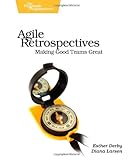
Agile Retrospectives: Making Good Teams Great
See how to mine the experience of your software development team continually throughout the life of the project. The tools and recipes in this book will help you uncover and solve hidden (and not-so-hidden) problems with your technology, your methodology, and those difficult "people" issues on your team.
Project retrospectives help teams examine what went right and what went wrong on a project. But traditionally, retrospectives (also known as "post-mortems") are only helpful at the end of the project--too late to help. You need agile retrospectives that are iterative and incremental. You need to accurately find and fix problems to help the team today.
Now, Derby and Larsen show you the tools, tricks, and tips you need to fix the problems you face on a software development project on an on-going basis. You'll see how to architect retrospectives in general, how to design them specifically for your team and organization, how to run them effectively, how to make the needed changes, and how to scale these techniques up. You'll learn how to deal with problems, and implement solutions effectively throughout the project--not just at the end.
With regular tune-ups, your team will hum like a precise, world-class orchestra.

Behind Closed Doors: Secrets of Great Management (Pragmatic Programmers)
Great management is difficult to see as it occurs. It's possible to see the results of great management, but it's not easy to see how managers achieve those results. Great management happens in one-on-one meetings and with other managers---all in private. It's hard to learn management by example when you can't see it.
You can learn to be a better manager---even a great manager---with this guide. You'll follow along as Sam, a manager just brought on board, learns the ropes and deals with his new team over the course of his first eight weeks on the job. From scheduling and managing resources to helping team members grow and prosper, you'll be there as Sam makes it happen. You'll find powerful tips covering:
- Delegating effectively
- Using feedback and goal-setting
- Developing influence
- Handling one-on-one meetings
- Coaching and mentoring
- Deciding what work to do---and what not to do
- ...and more.
Full of tips and practical advice on the most important aspects of management, this is one of those books that can make a lasting and immediate impact on your career.