
David Geary
Author of Graphic Java, co-author of Core JSF, member of the JSF Expert Group

David Geary is the president of Clarity Training, Inc. (corewebdevelopment.com), where he teaches developers to implement web applications using JavaServer Faces (JSF) and the Google Web Toolkit (GWT).
A prominent author, speaker, and consultant, David holds a unique qualification as a Java expert: He wrote the best-selling books on both Java component frameworks: Swing and JavaServer Faces. David's Graphic Java Swing was the best-selling Swing book, and is one of the best-selling Java books of all-time, and Core JSF, which David wrote with Cay Horstman, is the best-selling book on JavaServer Faces.
David was one of a handful of experts on the JSF 1.0 Expert Group (EG) that actively defined the standard Java-based web application framework, and David is currently on the JSF 2 Expert Group, helping to vastly improve JSF in version 2.
Besides serving on the JSF and JSTL Expert Groups, David has contributed to open-source projects and he has written questions for two of Sun's Certification Exams: Web Developer Certification and JavaServer Faces Certification. He invented the Struts Template library which was the precursor to Tiles, a popular framework for composing web pages from JSP fragments, was the 2nd Struts committer and contributed to the Apache Shale project.
David has spoken at more than 100 NFJS symposiums since 2003, and he also speaks at other conferences such as TheServerSide Java Symposium, JavaOne, JavaPolis, and JAOO. David has taught at Java University for the past three years, and is a three-time JavaOne rock star.
PRESENTATIONS
BOOKS
Core JavaServer Faces (3rd Edition)
JavaServer Faces (JSF) is the standard Java EE technology for building web user interfaces. It provides a powerful framework for developing server-side applications, allowing you to cleanly separate visual presentation and application logic. JSF 2.0 is a major upgrade, which not only adds many useful features but also greatly simplifies the programming model by using annotations and “convention over configuration” for common tasks.
To help you quickly tap into the power of JSF 2.0, the third edition of Core JavaServer™ Faces has been completely updated to make optimum use of all the new features. The book includes
- Three totally new chapters on using Facelets tags for templating, building composite components, and developing Ajax applications
- Guidance on building robust applications with minimal hand coding and maximum productivity–without requiring any knowledge of servlets or other low-level “plumbing”
- A complete explanation of the basic building blocks–from using standard JSF tags, to working with data tables, and converting and validating input
- Coverage of advanced tasks, such as event handling, extending the JSF framework, and connecting to external services
- Solutions to a variety of common challenges, including notes on debugging and troubleshooting, in addition to implementation details and working code for features that are missing from JSF
- Proven solutions, hints, tips, and “how-tos” show you how to use JSF effectively in your development projects
Core JavaServer™ Faces, Third Edition, provides everything you need to master the powerful and time-saving features of JSF 2.0 and is the perfect guide for programmers developing Java EE 6 web apps on Glassfish or another Java EE 6-compliant application servers, as well as servlet runners such as Tomcat 6.
Google Web Toolkit Solutions: More Cool & Useful Stuff
Cu>
Google Web Toolkit (GWT) is an open source Java development framework for building Ajax-enabled web applications. Instead of the hodgepodge of technologies that developers typically use for Ajax–JavaScript, HTML, CSS, and XMLHttpRequest–GWT lets developers implement rich client applications with pure Java, using familiar idioms from the AWT, Swing, and SWT. GWT goes beyond most Ajax frameworks by making it easy to build desktop-like applications that run in the ubiquitous browser, where the richness of the user interface is limited only by the developer’s imagination.
This book focuses on the more advanced aspects of GWT that you need to implement real-world applications with rich user interfaces but without the heavy lifting of JavaScript and other Ajax-related technologies. Each solution in this practical, hands-on book is more than a recipe. The sample programs are carefully explained in detail to help you quickly master advanced GWT techniques, such as implementing drag-and-drop, integrating JavaScript libraries, and using advanced event handling methodologies.
Solutions covered include
• Building custom GWT widgets, including both high-level composites and low-level components
• Implementing a viewport class that includes iPhone-style automated scrolling
• Integrating web services with GWT applications
• Incorporating the Script.aculo.us JavaScript framework into GWT applications
• Combining Hibernate and GWT to implement database-backed web applications
• Extending the GWT PopupPanel class to implement a draggable and resizable window
• Creating a drag-and-drop module, complete with drag sources and drop targets
• Deploying GWT applications to an external server
• Dynamically resizing flex tables
• Using GWT widgets in legacy applications developed with other frameworks, such as Struts and JavaServer Faces
Complete Sample Code Available at www.coolandusefulgwt.com
All of the code used in this book has been tested, both in hosted and web modes, and in an external version of Tomcat (version 5.5.17), under Windows, Linux, and Mac OS X. For Windows and Linux, we used 1.4.60, and for the Mac we used 1.4.61. NOTE: There are three separate versions of the code. Please download the correct JAR file for the operating system you are using.
Foreword xiii
Preface xvi
Acknowledgments xviii
About the Authors xix
Solution 1: GWT Fundamentals and Beyond 1
Solution 2: JavaScript Integration 53
Solution 3: Custom Widget Implementation 71
Solution 4: Viewports and Maps 103
Solution 5: Access to Online Web Services 133
Solution 6: Drag and Drop 167
Solution 7: Simple Windows 199
Solution 8: Flex Tables 237
Solution 9: File Uploads 283
Solution 10: Hibernate Integration 303
Solution 11: Deployment to an External Server 325
Solution 12: GWT and Legacy Code 343
Index 371
Core JSTL: Mastering the JSP Standard Tag Library
In Core JSTL, leading Java platform expert David Geary presents the definitive guide to JSTL. Through practical examples and extensive sample code, Geary demonstrates how JSTL simplifies, streamlines, and standardizes a wide range of common Web development tasks. Coverage includes using JSTL tags for accessing JavaBeans components and collections, iteration, importing URLs, database access, working with XML, internationalization and localization; using the brand new JSTL expression language; and extending JSTL with custom tags.
Advanced JavaServer Pages
Aimed at the more experienced Java Web developer, Advanced JavaServer Pages covers leading-edge techniques for writing more maintainable Web applications in Java. Stressing custom tag libraries and other reusable components, this book is all you need to take your programming skills to the next level.There are any number of good introductory texts on JavaServer Pages. This title distinguishes itself with techniques recommended by Sun for building better Web applications. Backed up by the author's own collection of custom tag libraries, which allow ordinary Web designers to program with tags instead of Java code, this text covers all the bases from getting started with tags to more advanced techniques. Early examples of tag libraries include a variety of ways to validate data in HTML forms. Throughout, the book deftly describes installing tag libraries, and shows how HTML designers can use custom tags after Java developers have created them.
Readers also get best practices for JSP and Beans, which is a big plus. Author David Geary presents both Model 1 and Model 2 architectures. (In Model 1, JavaBeans are used to present data to front-end JSPs. In Model 2, a more sophisticated set of Java classes using the Model-View-Controller design pattern allows even greater flexibility.) Sample code for using JSP and JavaBeans for internationalized code (including French, German, and Chinese) will show you how to take your Web application to worldwide markets. The book concludes with a working case study of an online fruit stand (using several languages) and applies the techniques presented earlier on.
All in all, with its mix of practical advice and some very useful techniques for getting the most out of JSP and Java for Web applications, Advanced JavaServer Pages fills a valuable niche for any serious Java developer who wants to see some of the best ways to create Web applications today. --Richard Dragan
Topics covered:
- Custom tag tutorial (including JSP and TLD files)
- The tag life cycle
- Tag attributes
- Tag classes
- Body tag handlers
- Scripting variables
- Nested tags
- HTML forms and JavaBeans
- Validating form data with Beans and custom tags
- Templates and custom tags for defining regions within Web pages
- Model 1 and Model 2 basics
- Sample classes and tags for Model 2 framework (including samples for managing logins)
- Event handling
- Sensitive form resubmissions
- Internationalization techniques (including resource bundles and locales)
- Security issues (including basic, digest, form-based, and SSL authentication)
- Custom tags for JDBC database programming
- Database connection pooling, XML, and JavaBeans
- The Simple API for XML (SAX)
- The Document Object Model (DOM) and custom tags for these APIs
- XSLT and XML
- Case study for an internationalized online fruit stand
- Appendix on Servlet filters and the Servlet 2.3 specification
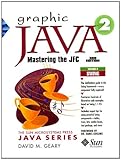
Graphic Java 2: Mastering the Jfc, By Geary, 3Rd Edition, Volume 2: Swing
If you're developing software that will be used by a large group of people, you need to give it a good-looking front-end--in Java 2, that means you have to use Swing. An excellent resource, Graphic Java 2: Mastering the JFC, Third Edition (Volume 2: Swing) takes on the Swing components one at a time and shows you how to incorporate them into attractive, efficient programs.In many ways, Graphic Java 2 is a cookbook. You search the table of contents or index for a reference to the kind of problem you want to solve, then examine the author's examples for the solution (or at least some clues to it). This is the book to turn to if you're wondering how to implement the JComboBox.KeySelectionManager interface (which enables users to select items in a combo box) or compare the various ways of making the JTree component into a file browser. Those are just two of hundreds of examples in David Geary's book.
While most examples don't serve any practical purpose by themselves, they do clearly illustrate how a specific aspect of Swing works. It's easy to adapt the details presented here into your own programs. Geary shows consideration for the reader by presenting all his examples as programs that can be compiled and including them on the enclosed CD-ROM. --David Wall
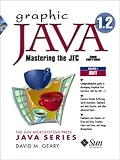
Graphic Java 1.2, Volume 1: AWT, Third Edition
Java developers know that the Abstract Windowing Toolkit (AWT) is still an effective way to build functional user interfaces, whether inside Web browsers or in stand-alone applications. David Geary's guide to AWT programming in Graphic Java 1.2 shows you all the basics of AWT newly refitted for the new Java Developer's Kit (JDK) 1.2 standard from Sun, including some excellent 2-D animation examples.After introducing the basics of the AWT library, the author looks at simple painting and 2-D graphics. Standout sections here look at displaying images--a staple of Internet programming--as well as transforming images with "filters" (such as dimming and rescaling an image). Graphic Java 1.2 shows you a variety of advanced techniques for getting control of your bit-mapped content. The tour of Java graphics capabilities moves on with coverage of layout managers and basic AWT components such as buttons, text fields, lists, and choices. For those who want to create stand-alone Java applications, there's much material on using Java menus.
The book's advanced material highlights new features of JDK 1.2, such as its support for lightweight controls, built-in double-buffering support, and advanced "native-style" operations (such as clipboard support and "rubber-banding" classes). The author also shows off his custom classes for 2-D sprite animation. --Richard Dragan