Lone Star Software Symposium: Dallas

May 18 - 20, 2012 - Dallas, TX


Embassy Suites Park Central
13131 North Central Expressway
Dallas, TX   75243
Map »

Craig Walls

Author of Spring in Action

Craig Walls has been professionally developing software for almost 18 years (and longer than that for the pure geekiness of it). He is a senior engineer with SpringSource as the Spring Social project lead and is the author of Spring in Action and XDoclet in Action (both published by Manning) and Modular Java (published by Pragmatic Bookshelf). He's a zealous promoter of the Spring Framework, speaking frequently at local user groups and conferences and writing about Spring and OSGi on his blog. When he's not slinging code, Craig spends as much time as he can with his wife, two daughters, 4 birds and 3 dogs.


Presentations

Effective Spring

After 9 years and several significant releases, Spring has gone a long way from challenging the then-current Java standards to becoming the de facto enterprise standard itself. Although the Spring programming model continues to evolve, it still maintains backward compatibility with many of its earlier features and paradigms. Consequently, there's often more than one way to do anything in Spring. How do you know which way is the right way?

In this session, we'll explore several ways that Spring has changed over the years and look at the best approaches when working with the latest versions of Spring.

Developing Next-Generation Applications

For a long while, we've built applications pretty much the same way. Regardless of the frameworks (or even languages and platforms) employed, we've packaged up our web application, deployed it to a server somewhere, and asked our users to point their web browser at it.

But now we're seeing a shift in not only how applications are deployed, but also in how they're consumed. The cost and hassle of setting up dedicated servers is driving more applications into the cloud. Meanwhile, our users are on-the-go more than ever, consuming applications from their mobile devices more often than a traditional desktop browser. And even the desktop user is expecting a more interactive experience than is offered by simple page-based HTML sites.

With this shift comes new programming models and frameworks. It also involves a shift in how we think about our application design. Standing up a simple HTML-based application is no longer good enough.

In this session, we'll discuss what the next generation of applications looks like, exploring such things as the mobile web and cloud computing. We'll also dig into some of the technologies and practices such as REST, OAuth, and JavaScript microframeworks that enable us to move forward.

Spring Data

This session starts with a high-level look at all that the Spring Data project has to offer. Then we'll dive deeper into a few select Spring Data modules, including Spring Data Neo4j, Spring Data MongoDB, Spring Data Redis, Spring Data JPA, and Spring Data JDBC Extensions

In recent years, there has been a renewed interest in how data is stored. Although RDBMS has long been treated as a one-size-fits-all solution for data storage, a new breed of datastores has arrived to offer a best-fit solution. Key-value stores, column stores, document stores, graph databases, as well as the traditional relational database are options to consider.

With these new data storage options come new and different ways of interacting with data. Even though all of these data storage options offer Java APIs, they are widely different from each other and the learning curve can be quite steep. Even if you understand the concepts and benefits of each database type, there's still the huge barrier of understanding how to work with each database's individual API.

Spring Data is a project that makes it easier to build Spring-powered applications that use new data, offering a reasonably consistent programming model regardless of which type of database you choose. In addition to supporting the new "NoSQL" databases such as document and graph databases, Spring Data also greatly simplifies working with RDBMS-oriented datastores using JPA.

Building Web Applications with Spring MVC

In this session, we'll start with the basics of Spring MVC development, focusing on how to leverage the new annotation-driven model. With that foundation set, we'll continue by exploring the new features in Spring 3.0 and 3.1 to build RESTful web applications that can serve both human-facing content as well as resources that are consumed by machine clients.

From the very beginning, Spring has included Spring MVC, a web framework built around the Spring Framework. Originally based on a rich hierarchy of controller classes, Spring MVC served developers well, but began to look a little long in the tooth compared to other web frameworks.

Starting with Spring 2.5, Spring MVC took a major evolutionary step, breaking away from the rigid controller class hierarchy model to embrace a more flexible annotation-driven model. Often referred to as Spring @MVC, this new model has continued to improve with Spring 3.0 and Spring 3.1.

Securing Spring

In this session, I'll show you how to secure your Spring application with Spring Security 3.0. You'll see hot to declare both request-oriented and method-oriented security constraints. And you'll see how SpEL can make simple work of expressing complex security rules.

Although we may invite guests into our homes and give someone a ride in our car, we locks and alarms on our homes and our cars to keep uninvited and malicious visitors out. Similarly, we allow people to use the applications that we develop, but we probably want to control the access that they have.

Security is an important aspect of any application. And while we could program security rules into the web controllers and methods in our application, we'd find ourselves cluttering our business logic with repetitive security code. Security is a cross-cutting concern--begging to be handled with aspect-oriented techniques.

Spring Security is an authentication and access-control framework based on Spring that provides security aspects. With Spring Security, you can declare who is allowed to access your application and what they're allowed to see, keeping your application logic focused and uncluttered with security details.

Books

by Craig Walls

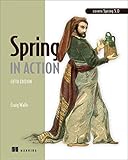
Spring in Action Buy from Amazon
List Price: $49.99
Price: $27.49
You Save: $22.50 (45%)
  • Summary

    Totally revised for Spring 3.0, this book is a hands-on guide to the Spring Framework. It covers the latest features, tools, and practices including Spring MVC, REST, Security, Web Flow, and more. Following short code snippets and an ongoing example developed throughout the book, you'll learn how to build simple and efficient J2EE applications.

    About the Technology

    Spring Framework is required knowledge for Java developers, and Spring 3.0 introduces powerful new features like SpEL, the Spring Expression Language, new annotations for the IoC container, and much-needed support for REST. Whether you're just discovering Spring or you want to absorb the new 3.0 features, there's no better way to master Spring than this book.

    About the Book

    Spring in Action, Third Edition continues the practical, hands-on style of the previous bestselling editions. Author Craig Walls has a special knack for crisp and entertaining examples that zoom in on the features and techniques you really need. This edition highlights the most important aspects of Spring 3.0 including REST, remote services, messaging, Security, MVC, Web Flow, and more.

    What's Inside
    • Using annotations to reduce configuration
    • Working with RESTful resources
    • Spring Expression Language (SpEL)
    • Security, Web Flow, and more
    Who Should Read This Book

    Nearly 100,000 developers have used this book to learn Spring!

    Table of Contents
      PART 1 CORE SPRING
    1. Springing into action
    2. Wiring beans
    3. Minimizing XML configuration in Spring
    4. Aspect-oriented Spring
    5. PART 2 SPRING APPLICATION ESSENTIALS
    6. Hitting the database
    7. Managing transactions
    8. Building web applications with Spring MVC
    9. Working with Spring Web Flow
    10. Securing Spring
    11. PART 3 INTEGRATING SPRING
    12. Working with remote services
    13. Giving Spring some REST
    14. Messaging in Spring
    15. Managing Spring beans with JMX
    16. Odds and ends

by Craig Walls

Modular Java: Creating Flexible Applications with Osgi and Spring (Pragmatic Programmers) Buy from Amazon
List Price: $34.95
Price: $21.91
You Save: $13.04 (37%)
  • The secret weapon for attacking complexity in any project is to break it down into smaller, cohesive, and more easily digestible pieces. With Modular Java, you can easily develop applications that are more flexible, testable, maintainable, and comprehensible.

    Modular Java is a pragmatic guide to developing modular applications using OSGi, the framework for dynamic modularity in Java, and Spring Dynamic Modules, an OSGi extension to the Spring Framework. You'll start with the basics but quickly ramp up, creating loosely coupled modules that publish and consume services, and you'll see how to compose them into larger applications. Along the way, you'll apply what you learn as you build a complete web application that is made up of several OSGi modules, using Spring-DM to wire those modules together.

    Modular Java is filled with tips and tricks that will make you a more proficient OSGi and Spring-DM developer. Equipped with the know-how gained from this book, you'll be able to develop applications that are more robust and agile.


by Craig Walls and Ryan Breidenbach

Spring in Action Buy from Amazon
List Price: $49.99
Price: $31.67
You Save: $18.32 (37%)
  • Spring in Action 2E is an expanded, completely updated second edition of the best selling Spring in Action. Written by Craig Walls, one of Manning's best writers, this book covers the exciting new features of Spring 2.0, which was released in October 2006.

    Spring is a lightweight container framework that represents an exciting way to build enterprise components with simple Java objects. By employing dependency injection and AOP, Spring encourages loosely coupled code and enables plain-old Java objects with capabilities that were previously reserved for EJBs. This book is a hands-on, example-driven exploration of the Spring Framework. Combining short code snippets and an ongoing example developed throughout the book, it shows readers how to build simple and efficient J2EE applications, how to solve persistence problems, handle asynchronous messaging, create and consume remote services, build web applications, and integrate with most popular web frameworks. Readers will learn how to use Spring to write simpler, easier to maintain code so they can focus on what really matters-- critical business needs.

    Spring in Action, 2E is for Java developers who are looking for ways to build enterprise-grade applications based on simple Java objects, without resorting to more complex and invasive EJBs. Even hard-core EJB users will find this book valuable as Spring in Action, 2E will describe ways to use EJB components alongside Spring. Software architects will also find Spring in Action, 2E useful as they assess and apply lightweight techniques prescribed by Spring. and learn how Spring can be applied at the various layers of enterprise applications.