Lone Star Software Symposium: Dallas

May 20 - 22, 2011 - Dallas, TX


Crowne Plaza Suites Dallas
7800 Alpha Road
Dallas, TX   75240
Map »

NOTE: You are viewing details about a past event. We will be back in DallasMay 17 - 19, 2013.
View the event details here ».

Craig Walls

Author of Spring in Action

Craig Walls is a senior engineer with SpringSource as the Spring Social project lead and is the author of Spring in Action and XDoclet in Action (both published by Manning) and Modular Java (published by Pragmatic Bookshelf). He's a zealous promoter of the Spring Framework, speaking frequently at local user groups and conferences and writing about Spring and OSGi on his blog. When he's not slinging code, Craig spends as much time as he can with his wife, two daughters, 2 birds and 3 dogs.


Presentations

What's new in Spring

In this session, I'll lead a guided tour through the latest that Spring has to offer. Whether you're a Spring veteran or a Spring newbie, there will be something new for nearly everyone.

It's been 8 years since Spring 1.0 was released. In that time it has gone from a modest open-source project to being a de facto standard Java application framework. Now, as Spring enters its 8th year, it continues its attack on Java complexity, packed with many new features such as:

  • First-class REST support
  • A new expression language
  • More options for annotation-driven bean wiring
  • Bean profiles
  • Declarative caching abstraction
  • Enhanced Java-based configuration
  • A new "c:" namespace
  • Unified property management
  • And much more

In this session, I'll lead a guided tour through the latest that Spring has to offer. Whether you're a Spring veteran or a Spring newbie, there will be something new for nearly everyone.

Introducing Spring Roo: From Zero to Working Spring Application in Record Time

In this example-driven session we'll see how to swiftly develop Spring applications using Spring Roo. We'll start with an empty directory and quickly work our way up to a fully functioning web application. You'll see how Roo handles a lot of heavy-lifting that you'd normally have to do yourself when working with Spring. And we'll stop at a few scenic points along the way to see how Roo accomplishes some of its magic.

In recent years, rapid application development frameworks such as Rails and Grails have earned a lot of attending. By employing code generation, convention-over-configuration, and the dynamic capabilities of their core languages (Ruby and Groovy) to offer unparalleled productivity, helping get projects off the ground quickly.

As awesome as these frameworks are, they do have one negative mark against them. Although developers love working with them, convincing the "boss" to build mission-critical applications in a relatively new development style based can be difficult. The mere mention of a word like "Groovy" conjures up images of tie-dye shirts and VW vans. Risk-averse project managers often think that free love may have been a big thing in the 70s, but it has no place in serious business.

If psychedelic frameworks are a tough-sell in your organization, then you can still feel much of the same productivity gains while developing Spring applications. Spring Roo mixes Spring and Java with a little code generation and a dash of compile-time AspectJ to achive a rapid development environment that resembles Rails and Grails. But instead of producing Ruby/Rails or Groovy/Grails code that may make your manager twitch, Roo produces Java-based projects that use the Spring Framework--which is already accepted in many organizations.

Developing Social-Ready Web Applications

Businesses are increasingly recognizing the value of connecting with their customers on a more personal level. Companies can utilize social networking to transition from "Big Faceless Corporation" to "Friend" by taking their wares to the online communities where their customers are. In this age of social media, those communities are found at social network sites such as Facebook, Twitter, and LinkedIn. In this session, you'll learn how to build applications that interact with the various social networks. We'll also look at Spring Social, a new feature in the Spring portfolio that enables integration with social networks in Spring-based applications.

Session Detail

Modular Java: Intro to OSGi with Spring-DM, OSGi Blueprints, and Gradle

The secret weapon for attacking complexity in any project is to break it down into smaller, cohesive, and more easily digestible pieces. Unfortunately, Java lacks critical ingredients necessary to achieve true modularity.

Enter OSGi. OSGi is an established framework for dynamic modularity in Java. With OSGi, you'll be able to realize true modularity in your Java projects, making them more flexible, comprehensible, and testable.

In this presentation, we'll look at the benefits of modularity, the fundamentals of OSGi, and see how to develop basic OSGi bundles the easy way using Spring, OSGi Blueprints, and Gradle.

Books

by Craig Walls

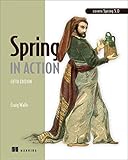
Spring in Action Buy from Amazon
List Price: $49.99
Price: $28.42
You Save: $21.57 (43%)
  • Summary

    Totally revised for Spring 3.0, this book is a hands-on guide to the Spring Framework. It covers the latest features, tools, and practices including Spring MVC, REST, Security, Web Flow, and more. Following short code snippets and an ongoing example developed throughout the book, you'll learn how to build simple and efficient J2EE applications.

    About the Technology

    Spring Framework is required knowledge for Java developers, and Spring 3.0 introduces powerful new features like SpEL, the Spring Expression Language, new annotations for the IoC container, and much-needed support for REST. Whether you're just discovering Spring or you want to absorb the new 3.0 features, there's no better way to master Spring than this book.

    About the Book

    Spring in Action, Third Edition continues the practical, hands-on style of the previous bestselling editions. Author Craig Walls has a special knack for crisp and entertaining examples that zoom in on the features and techniques you really need. This edition highlights the most important aspects of Spring 3.0 including REST, remote services, messaging, Security, MVC, Web Flow, and more.

    Purchase of the print book comes with an offer of a free PDF, ePub, and Kindle eBook from Manning. Also available is all code from the book.

    What's Inside
    • Using annotations to reduce configuration
    • Working with RESTful resources
    • Spring Expression Language (SpEL)
    • Security, Web Flow, and more
    Who Should Read This Book

    Nearly 100,000 developers have used this book to learn Spring!

    Table of Contents
      PART 1 CORE SPRING
    1. Springing into action
    2. Wiring beans
    3. Minimizing XML configuration in Spring
    4. Aspect-oriented Spring
    5. PART 2 SPRING APPLICATION ESSENTIALS
    6. Hitting the database
    7. Managing transactions
    8. Building web applications with Spring MVC
    9. Working with Spring Web Flow
    10. Securing Spring
    11. PART 3 INTEGRATING SPRING
    12. Working with remote services
    13. Giving Spring some REST
    14. Messaging in Spring
    15. Managing Spring beans with JMX
    16. Odds and ends

by Craig Walls

Modular Java: Creating Flexible Applications with Osgi and Spring (Pragmatic Programmers) Buy from Amazon
List Price: $34.95
Price: $23.65
You Save: $11.30 (32%)
  • Attack complexity in your Java applications using Modular Java. This pragmatic guide introduces you to OSGi and Spring Dynamic Modules, two of the most compelling frameworks for Java modularization. Driven by real-world examples, this book will equip you with the know-how you need to develop Java applications that are composed of smaller, loosely coupled, highly cohesive modules.

    The secret weapon for attacking complexity in any project is to break it down into smaller, cohesive, and more easily digestible pieces. With Modular Java, you can easily develop applications that are more flexible, testable, maintainable, and comprehensible.

    Modular Java is a pragmatic guide to developing modular applications using OSGi, the framework for dynamic modularity in Java, and Spring Dynamic Modules, an OSGi extension to the Spring Framework. You'll start with the basics but quickly ramp up, creating loosely coupled modules that publish and consume services, and you'll see how to compose them into larger applications. Along the way, you'll apply what you learn as you build a complete web application that is made up of several OSGi modules, using Spring-DM to wire those modules together.

    Modular Java is filled with tips and tricks that will make you a more proficient OSGi and Spring-DM developer. Equipped with the know-how gained from this book, you'll be able to develop applications that are more robust and agile.